
Chemicals
Understanding the Risks of Online Purchasing of Research Chemicals
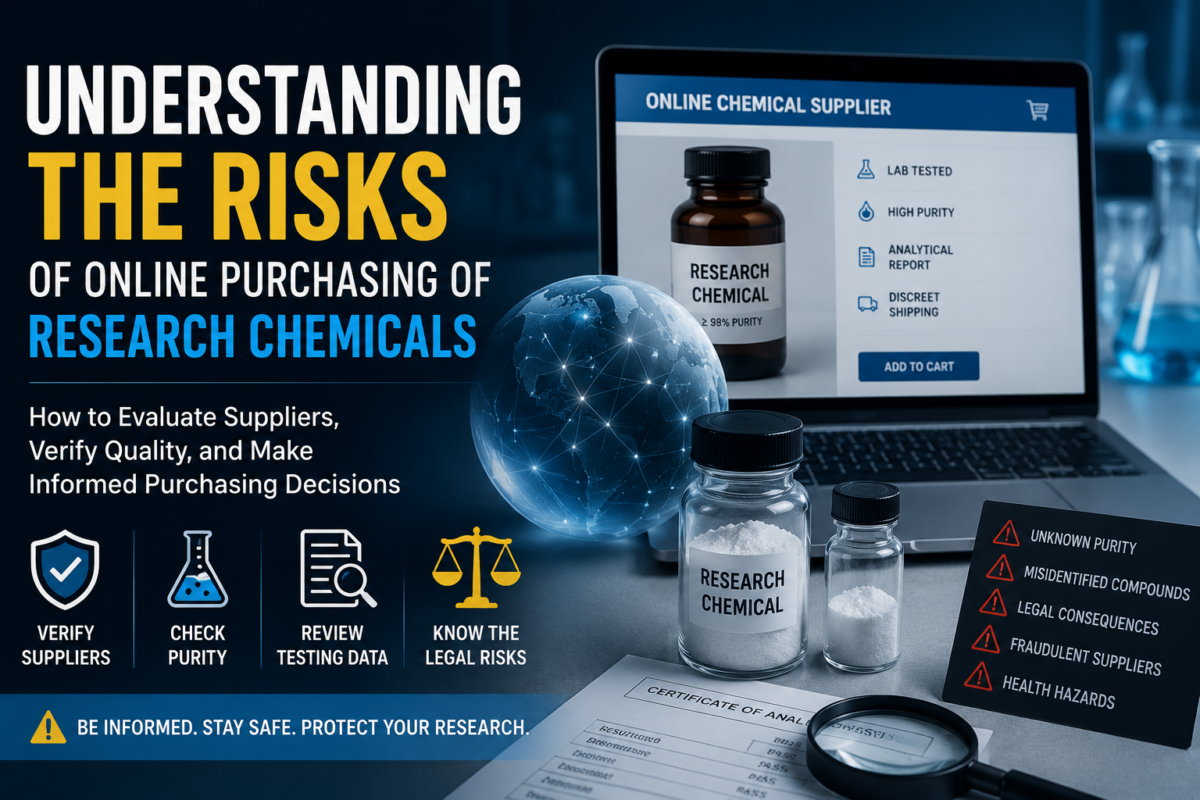
The internet has transformed the way laboratories, academic institutions, and independent researchers access scientific materials. Today, a wide variety of research chemicals can be sourced online from suppliers around the world. While this accessibility has created new opportunities for scientific research, it has also introduced significant challenges and risks that buyers must carefully consider.
Understanding the risks of online purchasing of research chemicals is essential for anyone seeking reliable products and accurate research outcomes. From product quality concerns to legal considerations, informed decision-making plays a critical role in ensuring safe and responsible purchasing practices.
In this guide, we’ll explore the common risks associated with buying research chemicals online, discuss the importance of consumer awareness, and provide practical tips for evaluating suppliers and products before making a purchase.
Understanding the Importance of Safety in Online Purchasing
Online marketplaces provide convenience, access to specialized compounds, and the ability to compare products from multiple suppliers. However, unlike many traditional scientific procurement channels, the research chemical market can vary significantly in terms of quality standards, transparency, and regulatory oversight.
For researchers, purchasing decisions should extend beyond price and availability. Understanding who is supplying the product, how it has been tested, and whether it meets quality standards is essential for obtaining reliable materials.
Consumer awareness helps researchers:
- Identify reputable suppliers
- Evaluate product quality claims
- Understand testing documentation
- Avoid fraudulent vendors
- Reduce the risk of purchasing misidentified compounds
- Improve the reliability of research outcomes
Education and informed decision-making remain some of the most effective tools for navigating the research chemical marketplace safely.
Common Risks Associated with Buying Research Chemicals Online
While many suppliers operate professionally and prioritize quality assurance, buyers should remain aware of several common risks.
Product Purity Issues
One of the most significant concerns when purchasing research chemicals online is product purity.
Compounds that have not undergone proper testing may contain:
- Residual solvents
- Synthesis byproducts
- Unknown contaminants
- Incorrect concentrations
- Degradation products
Impurities can negatively impact analytical results and compromise research reliability.
For this reason, researchers should prioritize suppliers that provide batch-specific testing data and transparent quality control procedures.
Misidentified Chemicals
Another risk involves receiving compounds that differ from the advertised product.
Without proper analytical verification, it may be difficult to determine whether a substance matches its stated identity.
Misidentified chemicals can result from:
- Labeling errors
- Manufacturing mistakes
- Inadequate testing
- Supply chain issues
Researchers should never rely solely on product descriptions and should seek supporting analytical documentation whenever possible.
Fraudulent Suppliers
The growing popularity of research chemicals has unfortunately attracted dishonest vendors.
Warning signs of fraudulent suppliers may include:
- Lack of contact information
- Poor website transparency
- Inconsistent product information
- Unverifiable claims
Fraudulent suppliers may deliver products of unknown quality or fail to deliver products entirely.
Careful supplier evaluation is essential before making a purchase.
Inconsistent Product Quality
Consistency is particularly important for scientific research.
When product quality varies between batches, researchers may experience:
- Inconsistent experimental outcomes
- Reproducibility issues
- Unreliable analytical results
- Increased uncertainty in research findings
Reliable suppliers implement quality assurance procedures designed to minimize batch-to-batch variation.
Potential Health and Safety Hazards
Although research chemicals are intended for scientific and laboratory purposes, poorly characterized or contaminated materials can introduce additional safety concerns during handling and analysis.
Potential risks may include:
- Unknown impurities
- Inaccurate labeling
- Chemical instability
- Unexpected reactivity
Proper handling procedures and quality verification are essential components of responsible research practices.
Challenges of Verifying Product Quality
One of the biggest difficulties facing online buyers is determining whether product claims are accurate. Unlike physical inspection in a laboratory setting, online purchases often rely heavily on supplier-provided information. Researchers should evaluate:
Certificates of Analysis (COAs)
A Certificate of Analysis typically provides:
- Chemical identity
- Batch number
- Purity results
- Testing methodology
- Quality control information
Legitimate suppliers often provide detailed COAs that can help researchers assess product quality.
Laboratory Testing Methods
Understanding the analytical methods used by suppliers can provide additional confidence.
Common testing techniques include:
High-Performance Liquid Chromatography (HPLC)
Used to assess purity and identify impurities.
Gas Chromatography-Mass Spectrometry (GC-MS)
Provides detailed chemical identification.
Nuclear Magnetic Resonance (NMR)
Confirms molecular structure and composition.
Fourier Transform Infrared Spectroscopy (FTIR)
Used for compound identification and verification.
Suppliers that openly discuss testing procedures generally demonstrate a stronger commitment to quality assurance.
Tips for Safe Online Purchasing of Research Chemicals
While no purchasing process is completely risk-free, several best practices can help researchers make informed decisions.
Choose Established Suppliers
Look for suppliers with:
- Professional websites
- Transparent business information
- Clear product documentation
- Consistent product availability
- Detailed testing data
A supplier’s reputation often reflects its commitment to quality and customer support.
Review Customer Feedback
Customer reviews can provide useful insights into:
- Product consistency
- Delivery reliability
- Customer service quality
- Overall supplier reputation
Researchers should consider multiple sources of feedback and avoid relying on isolated reviews.
Verify Analytical Documentation
Before purchasing, review available testing documents.
Key questions include:
- Is a Certificate of Analysis available?
- Are purity results disclosed?
- Which analytical methods were used?
- Is testing performed on individual batches?
Comprehensive documentation can significantly improve confidence in product quality.
Assess Supplier Transparency
Trustworthy suppliers generally provide:
- Product specifications
- Safety information
- Testing procedures
- Contact details
- Terms and policies
Transparency is often a strong indicator of professionalism and accountability.
Verify Chemical Identity and Purity
Researchers conducting critical work may choose to independently verify compounds using analytical testing methods such as:
- HPLC
- GC-MS
- NMR
- FTIR
Independent verification provides additional assurance regarding identity and purity.
Legal Considerations When Buying Research Chemicals
Understanding the legal status of research chemicals is an important part of responsible purchasing. The legal landscape surrounding research chemicals is complex and continually evolving.
Regulations Vary by Region
Different jurisdictions may classify compounds differently. A substance that is permitted for research purposes in one country may be restricted or regulated elsewhere.
Factors that influence legality include:
- National legislation
- Regional regulations
- Import restrictions
- Chemical classification frameworks
Researchers should always verify the legal status of a compound within their specific jurisdiction.
Import and Customs Considerations
International purchases may be subject to:
- Customs inspections
- Import documentation requirements
- Regulatory review
- Shipping restrictions
Understanding these requirements can help avoid delays and compliance issues.
Importance of Regulatory Awareness
Researchers should remain informed about:
- Current regulations
- Legislative updates
- Controlled substance classifications
- Import and export requirements
Regulatory awareness helps support responsible purchasing decisions and reduces potential legal complications.
The Role of Education and Informed Decision-Making
The most effective way to reduce purchasing risks is through education.
Informed buyers are better equipped to:
- Evaluate suppliers
- Understand testing documentation
- Assess product quality
- Navigate legal requirements
- Make responsible purchasing decisions
Research chemicals play an important role in scientific investigation, and obtaining high-quality materials begins with understanding how to evaluate suppliers and products critically.
At Momarchem, transparency, quality assurance, and reliable product information remain core priorities. By providing detailed documentation and maintaining rigorous quality standards, Momarchem supports researchers seeking dependable materials for scientific research and analytical applications.
Online purchasing has made research chemicals more accessible than ever before, but it also requires careful evaluation and responsible decision-making. Product purity concerns, misidentified compounds, fraudulent suppliers, inconsistent quality, and legal complexities are all important factors that researchers should consider.
By focusing on supplier transparency, analytical testing, quality documentation, and regulatory compliance, buyers can significantly reduce potential risks and improve confidence in their purchasing decisions. Ultimately, informed decision-making and ongoing education remain the foundation of safe and responsible research chemical procurement.