
Chemicals
The Legal Landscape of Research Chemicals: Regulations, Compliance, and Responsible Research
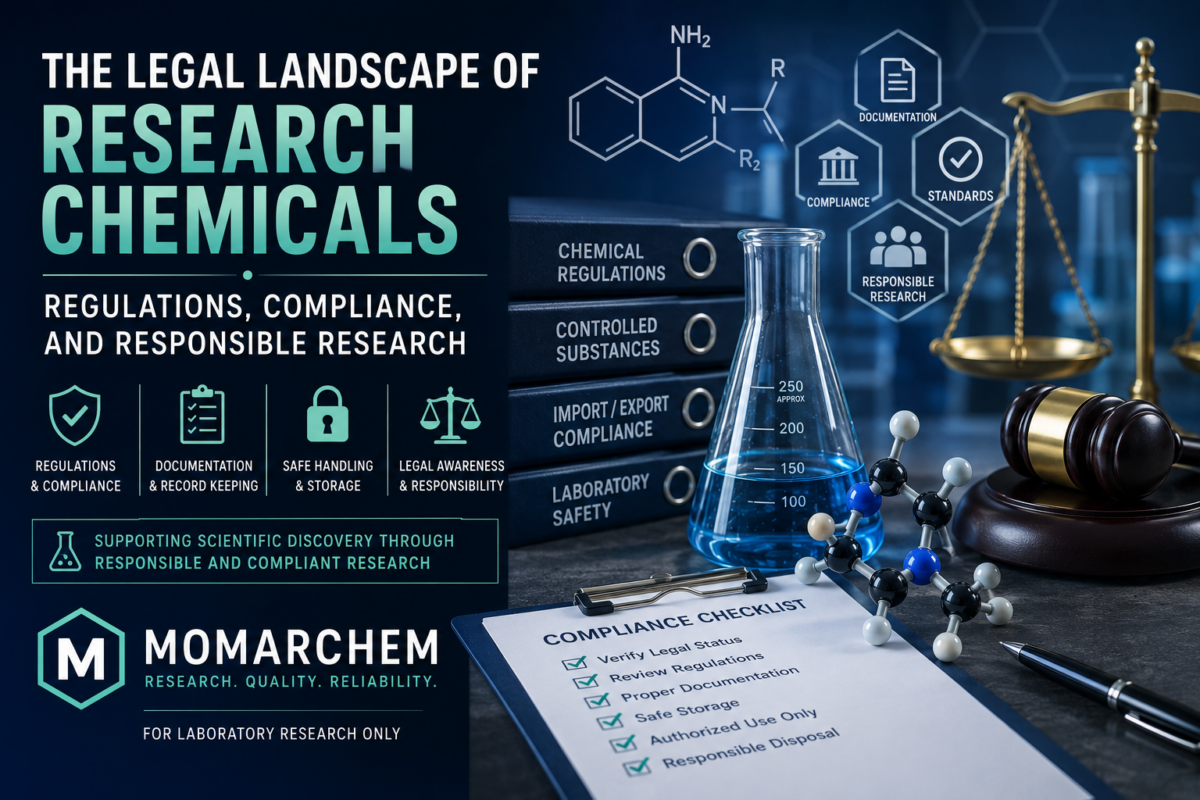
Research chemicals play an important role in modern scientific discovery. Laboratories, universities, analytical facilities, and research institutions use specialized compounds to investigate chemistry, pharmacology, neuroscience, toxicology, and other scientific fields.
However, the legal status and regulatory requirements surrounding research chemicals can vary significantly depending on the compound, country, jurisdiction, intended use, and applicable laws. Understanding these requirements is an essential part of responsible scientific research.
At Momarchem, we believe that responsible research begins with proper knowledge, appropriate documentation, and compliance with applicable laws and institutional policies. This article explores the legal landscape surrounding research chemicals and highlights important considerations for responsible laboratory research.
What Are Research Chemicals?
Research chemicals are substances used for scientific investigation, laboratory analysis, chemical research, and other legitimate research purposes.
They may be studied to evaluate:
- Chemical properties
- Molecular structures
- Analytical characteristics
- Biological interactions
- Pharmacological mechanisms
- Metabolic pathways
- Structure-activity relationships
- Potential applications in scientific research
Research chemicals can include a wide range of substances, from common laboratory reagents to specialized compounds used in advanced analytical and biochemical research.
Because different compounds have different properties and regulatory classifications, researchers must evaluate each substance individually.
Why Research Chemical Regulations Matter
Regulations help establish standards for the production, distribution, storage, transportation, and use of chemical substances.
These regulations can address:
- Public health and safety
- Environmental protection
- Workplace safety
- Controlled substances
- Import and export requirements
- Chemical manufacturing
- Transportation and shipping
- Laboratory documentation
Compliance is not simply a legal obligation. It also supports responsible scientific practice and helps protect researchers, laboratory personnel, institutions, and the wider community.
Regulations Vary Between Jurisdictions
One of the most important aspects of research chemical compliance is understanding that laws differ between countries and regions.
A compound may be:
- Permitted for certain research purposes in one jurisdiction
- Subject to restrictions in another
- Controlled or prohibited elsewhere
- Regulated differently depending on concentration or formulation
For this reason, researchers should not assume that the legal status of a chemical in one country applies to another.
Before purchasing, importing, possessing, or using a research chemical, organizations should review the applicable laws and regulations in the relevant jurisdiction.
Controlled Substances and Restricted Compounds
Some research chemicals may fall under controlled substance legislation. These regulations may place specific requirements on:
- Possession
- Storage
- Recordkeeping
- Distribution
- Importation
- Exportation
- Laboratory authorization
Controlled substances may require special licenses, permits, registrations, or institutional approvals.
Researchers and institutions should confirm the legal classification of a compound before beginning research activities. When necessary, qualified legal, regulatory, or compliance professionals should be consulted.
Import and Export Considerations
International research often involves the movement of chemical substances across borders. This can introduce additional regulatory requirements.
Before importing or exporting a research chemical, organizations may need to consider:
- Customs requirements
- Import permits
- Export controls
- Restricted substance lists
- Dangerous goods regulations
- Shipping documentation
- Destination-country laws
- End-use requirements
A chemical that can be legally purchased domestically may still require additional authorization for international shipment.
Researchers should verify all relevant requirements before arranging cross-border transportation.
The Importance of Proper Documentation
Accurate documentation is an important part of responsible research chemical management.
Laboratories should maintain appropriate records relating to:
- Product identity
- Chemical name
- CAS number, where applicable
- Quantity received
- Supplier information
- Batch information
- Certificate of Analysis
- Storage location
- Usage records
- Disposal procedures
Good documentation helps laboratories maintain traceability and supports regulatory compliance.
It can also improve experimental reproducibility by allowing researchers to identify the exact materials used in a study.
Certificates of Analysis and Product Quality
A Certificate of Analysis, commonly known as a COA, provides information about the testing and quality characteristics of a specific batch of material.
Depending on the product and testing process, a COA may include information such as:
- Product identification
- Batch number
- Purity analysis
- Testing methods
- Analytical results
- Date of analysis
Researchers should carefully review available documentation when selecting laboratory materials.
Reliable documentation helps researchers evaluate whether a product is suitable for a particular research application.
Safe Storage and Laboratory Management
Legal compliance and laboratory safety are closely connected.
Research chemicals should be stored according to their chemical characteristics and applicable safety requirements.
Important considerations may include:
- Temperature
- Light exposure
- Moisture
- Chemical compatibility
- Container integrity
- Access control
- Labeling requirements
Laboratories should also maintain appropriate procedures for inventory management.
Regular inventory reviews can help identify:
- Expired materials
- Damaged containers
- Unused chemicals
- Storage issues
- Documentation discrepancies
Proper inventory management helps reduce unnecessary risks and supports responsible laboratory operations.
Responsible Research Practices
Responsible research requires more than simply complying with regulations.
Researchers should also follow established laboratory procedures, institutional policies, and ethical standards.
Responsible practices may include:
- Using chemicals only for legitimate research purposes
- Limiting access to authorized personnel
- Maintaining accurate records
- Following appropriate safety procedures
- Using proper personal protective equipment
- Avoiding unauthorized distribution
- Following approved disposal procedures
These practices help protect laboratory personnel and support the integrity of scientific research.
The Role of Institutional Compliance
Universities, research organizations, pharmaceutical companies, and laboratories often have their own internal compliance systems.
These may include:
- Chemical safety committees
- Institutional research policies
- Laboratory safety officers
- Environmental health and safety departments
- Internal approval procedures
- Chemical inventory systems
Researchers should follow both external legal requirements and internal institutional policies.
Institutional requirements may be stricter than the minimum legal standards.
Chemical Safety and Regulatory Responsibility
Research chemical regulations are often connected to broader chemical safety frameworks.
Laboratories may need to consider:
- Hazard communication
- Safety Data Sheets
- Workplace exposure controls
- Chemical labeling
- Emergency procedures
- Waste management
- Transportation requirements
Understanding the potential hazards associated with a substance is an essential part of responsible research.
Researchers should ensure that appropriate safety information is available and that laboratory personnel understand the relevant procedures.
Environmental Considerations
Responsible chemical research also includes consideration of environmental impact.
Improper disposal of chemical substances can contribute to:
- Soil contamination
- Water pollution
- Environmental exposure
- Chemical accumulation
Laboratories should follow applicable hazardous waste regulations and institutional disposal procedures.
Chemicals should never be disposed of through unauthorized methods. Proper waste management helps protect the environment and supports regulatory compliance.
Why Researchers Should Verify Regulations
The regulatory status of research chemicals can change over time.
New legislation, regulatory decisions, court rulings, and international agreements can affect how a substance is classified or controlled.
Researchers should therefore verify current information rather than relying solely on:
- Outdated websites
- Old product descriptions
- Online forums
- Unverified social media posts
- Information from another jurisdiction
For important compliance decisions, researchers should consult official regulatory sources or qualified legal and compliance professionals.
Choosing a Responsible Research Chemical Supplier
A reliable supplier can help support responsible laboratory research by providing accurate product information and appropriate documentation.
Researchers may consider factors such as:
- Product identification
- Batch information
- Quality documentation
- Secure packaging
- Clear labeling
- Professional customer support
- Transparent research-use policies
However, purchasing from a supplier does not remove the responsibility of the researcher or institution to comply with applicable laws.
The buyer remains responsible for ensuring that the acquisition, possession, transportation, and use of a research chemical are legally permitted.
Momarchem’s Commitment to Responsible Research
At Momarchem, we recognize the importance of quality, transparency, and responsible scientific practices.
Our goal is to support legitimate research by providing research chemicals for qualified laboratory, analytical, and scientific applications.
We emphasize:
- Quality-focused sourcing
- Product consistency
- Secure packaging
- Clear product information
- Professional service
- Responsible research practices
Researchers should always conduct their own regulatory review and verify the legal status of any compound before ordering, importing, possessing, or using it.
The Future of Research Chemical Regulation
As scientific research continues to evolve, regulatory frameworks will also continue to develop.
Future regulatory discussions may increasingly focus on:
- New chemical technologies
- Novel research compounds
- International trade
- Analytical identification
- Public health and safety
- Environmental protection
- Responsible scientific innovation
Maintaining awareness of regulatory developments will remain an important responsibility for researchers and institutions.
The legal landscape surrounding research chemicals is complex and can vary significantly between jurisdictions. Regulations may apply to the manufacture, sale, purchase, possession, transportation, storage, importation, exportation, and use of individual compounds.
Responsible research requires more than scientific knowledge. Researchers must also understand applicable laws, maintain accurate documentation, follow laboratory safety procedures, and comply with institutional requirements.
By taking a careful and informed approach to regulatory compliance, researchers can help support safe, ethical, and scientifically responsible research.
Momarchem remains committed to supporting legitimate laboratory and scientific research through quality-focused products and responsible service.
Disclaimer: The information in this article is provided for general educational purposes only and does not constitute legal advice. Laws and regulations governing research chemicals vary by jurisdiction and may change over time. Researchers, laboratories, and institutions are responsible for verifying all applicable laws, regulations, permits, and institutional requirements before acquiring, possessing, transporting, or using any research chemical. Momarchem products are intended strictly for legitimate laboratory, analytical, and scientific research purposes only and are not intended for human or veterinary use.
Frequently Asked Questions
What are research chemical regulations?
Research chemical regulations are laws and rules governing the manufacture, sale, purchase, possession, transportation, storage, importation, exportation, and use of chemical substances used in scientific research.
Are research chemicals legal everywhere?
No. The legal status of a research chemical can vary significantly between countries, states, provinces, and other jurisdictions. Researchers should verify the applicable regulations before acquiring or using any compound.
What is a Certificate of Analysis?
A Certificate of Analysis, or COA, is documentation that provides information about the identity and analytical characteristics of a specific batch of a chemical product.
Do researchers need permits to work with research chemicals?
Requirements depend on the specific chemical, jurisdiction, quantity, and intended use. Some substances may require licenses, permits, registrations, or institutional approval.
Why is chemical documentation important?
Accurate documentation helps laboratories maintain traceability, support regulatory compliance, improve inventory management, and promote reproducible research.
Who is responsible for checking the legal status of a research chemical?
Researchers, laboratories, and institutions are responsible for verifying the applicable laws and regulations governing any chemical they intend to acquire, possess, transport, or use.