
Chemicals
Synthetic Psychedelics: An Overview of Modern Research Compounds
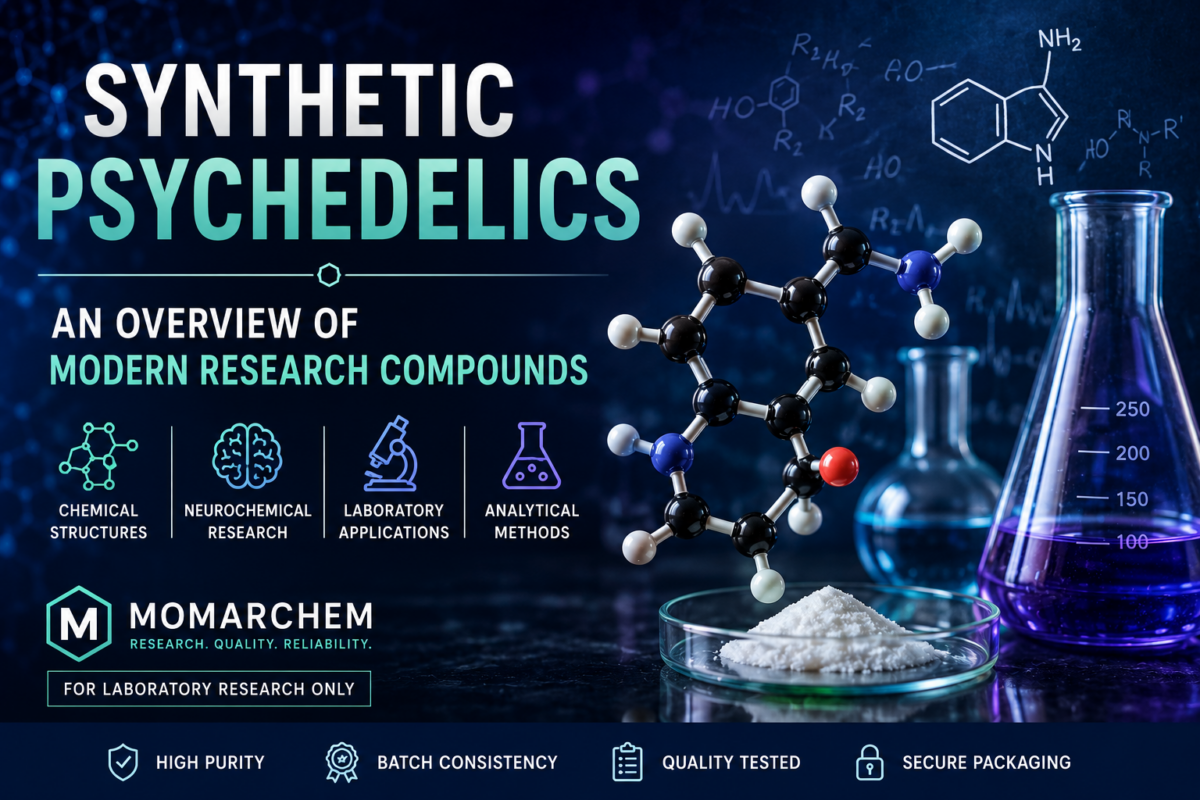
Synthetic psychedelics are a diverse group of laboratory-created compounds that have become important subjects of research in chemistry, neuroscience, pharmacology, and analytical science. By modifying specific molecular structures, researchers can investigate how different chemical features influence receptor interactions, molecular activity, and biological signaling.
Unlike naturally occurring compounds, synthetic research compounds can be carefully designed and structurally modified in laboratory settings. This makes them valuable tools for studying structure-activity relationships, receptor pharmacology, analytical detection, and the broader mechanisms involved in neurochemical research.
At Momarchem, we supply research chemicals intended exclusively for legitimate laboratory, analytical, and scientific research. This article provides an overview of synthetic psychedelics, their chemical characteristics, research applications, and the importance of responsible laboratory practices.
What Are Synthetic Psychedelics?
Synthetic psychedelics are chemically synthesized compounds that may interact with specific neurological receptor systems. Many are designed using structural frameworks inspired by naturally occurring molecules or previously studied chemical families.
The term “synthetic” refers to the method of production: these compounds are created through controlled chemical synthesis rather than being directly extracted from natural sources.
Their molecular structures can vary significantly. Some synthetic psychedelics are based on tryptamine frameworks, while others belong to different chemical families. Researchers study these differences to understand how molecular structure influences chemical and pharmacological properties.
Why Are Synthetic Psychedelics Studied?
Synthetic psychedelics provide researchers with tools for exploring complex questions in chemistry and neuroscience.
Scientific studies may examine:
- Molecular structure and chemical properties
- Receptor binding and selectivity
- Structure-activity relationships
- Neurochemical signaling
- Metabolic pathways
- Analytical detection methods
- Molecular pharmacology
- Chemical synthesis and characterization
By studying structurally related compounds, researchers can develop a deeper understanding of how small molecular changes can produce significant differences in chemical behavior.
Major Chemical Families
Synthetic psychedelic research encompasses multiple chemical families. Each group has its own structural characteristics and research applications.
Synthetic Tryptamines
Tryptamines are based on an indole-containing molecular framework. Researchers investigate how substitutions on the indole ring or modifications to the side chain affect molecular properties and receptor interactions.
This makes synthetic tryptamines important tools for structure-activity relationship research.
Phenethylamine-Based Compounds
Another major research area involves compounds built around phenethylamine-related structures. Modifications to the aromatic ring and side chain can influence molecular characteristics, making these compounds useful for comparative chemical studies.
Researchers often examine the relationship between chemical structure and receptor activity when studying these compounds.
Lysergamide-Related Compounds
Lysergamide-related structures represent another area of interest in synthetic psychedelic research. Their complex molecular frameworks provide opportunities for studying stereochemistry, receptor interactions, and structure-function relationships.
Because these compounds can possess intricate molecular architectures, they are also relevant to advanced analytical chemistry.
The Importance of Structure-Activity Relationships
Structure-activity relationship (SAR) research is one of the most important applications of synthetic psychedelic compounds.
SAR studies investigate how changes in molecular structure influence properties such as:
- Receptor affinity
- Molecular selectivity
- Chemical stability
- Lipophilicity
- Metabolism
- Biological activity
For example, modifying a functional group or changing the position of a substituent can affect how a molecule interacts with a specific receptor.
Understanding these relationships allows researchers to develop more detailed models of molecular recognition and chemical behavior.
Analytical Research Applications
Synthetic psychedelics are also important in analytical chemistry. Laboratories use advanced instrumentation to identify, characterize, and quantify chemical compounds.
Common analytical techniques include:
Liquid Chromatography-Mass Spectrometry
LC-MS combines chromatographic separation with mass spectrometric detection. It is widely used to identify compounds and analyze complex samples.
Gas Chromatography-Mass Spectrometry
GC-MS is another important analytical technique used to characterize compounds that are suitable for gas-phase analysis.
Nuclear Magnetic Resonance Spectroscopy
NMR spectroscopy provides detailed information about molecular structure and can help researchers confirm the identity and composition of synthesized compounds.
High-Performance Liquid Chromatography
HPLC is commonly used to assess chemical purity, separate components, and support analytical method development.
Infrared Spectroscopy
IR spectroscopy can help identify functional groups and provide additional information about molecular composition.
Using multiple analytical techniques can provide a more comprehensive understanding of a research compound’s identity and characteristics.
Synthetic Psychedelics and Neuroscience Research
Some synthetic psychedelic compounds are studied because of their interactions with neurotransmitter receptor systems. Researchers investigate these interactions to better understand how molecular signaling occurs within the nervous system.
This research can involve:
- Receptor pharmacology
- Neurotransmitter systems
- Signal transduction
- Molecular binding mechanisms
- Receptor selectivity
The goal of such research is to expand scientific knowledge of neurochemical processes. Laboratory findings may contribute to broader research in neuroscience and medicinal chemistry.
The Role of Controlled Laboratory Research
Research involving synthetic psychedelics requires careful controls and appropriate laboratory procedures.
Researchers should maintain:
- Accurate compound identification
- Proper sample labeling
- Controlled storage conditions
- Detailed laboratory records
- Appropriate protective equipment
- Validated analytical procedures
- Proper waste management
Good laboratory practices help support reliable results and improve experimental reproducibility.
Why Research Chemical Quality Matters
The quality and consistency of research chemicals are important factors in scientific research. Variations in purity or composition can influence analytical results and make it difficult to reproduce experimental findings.
When selecting a research chemical supplier, laboratories should consider:
- Product purity
- Batch consistency
- Available analytical documentation
- Secure packaging
- Proper labeling
- Reliable storage and handling procedures
- Professional customer support
High-quality research materials help researchers maintain confidence in their experimental data.
Responsible Handling and Regulatory Compliance
Synthetic psychedelics should only be handled by qualified researchers in appropriate laboratory environments.
Before acquiring or working with any research compound, laboratories should verify:
- Applicable national and local regulations
- Institutional requirements
- Import and export restrictions
- Storage requirements
- Documentation obligations
- Occupational health and safety procedures
Regulations can vary significantly between jurisdictions. Researchers and institutions are responsible for ensuring that all work is conducted in compliance with applicable laws and policies.
Momarchem’s Commitment to Scientific Research
At Momarchem, we understand the importance of quality, consistency, and responsible sourcing in laboratory research.
Our goal is to support qualified researchers by providing reliable research chemicals for legitimate scientific and analytical applications. We emphasize:
- Quality-focused sourcing
- Product consistency
- Secure packaging
- Professional service
- Reliable order processing
- Commitment to responsible research practices
Researchers should always verify the suitability and legal status of any compound before purchase or use.
The Future of Synthetic Psychedelic Research
As analytical technology and chemical synthesis continue to advance, synthetic psychedelic research is likely to remain an important area of scientific investigation.
New research may focus on:
- Improved analytical detection
- Advanced molecular characterization
- Receptor selectivity
- Structure-activity relationships
- Chemical metabolism
- Novel molecular frameworks
- Development of improved research methodologies
Advances in analytical instrumentation may also allow scientists to study increasingly complex molecular interactions with greater precision.
Synthetic psychedelics represent a broad and scientifically diverse group of research compounds. Their carefully designed molecular structures provide researchers with valuable tools for investigating chemistry, neuroscience, receptor pharmacology, and analytical science.
Through the study of synthetic psychedelics, scientists can examine how molecular structure influences chemical properties and biological interactions. From structure-activity relationship studies to advanced analytical research, these compounds continue to contribute to a growing body of scientific knowledge.
At Momarchem, we are committed to supporting legitimate laboratory research with quality-focused research chemicals and professional service.
Disclaimer: Momarchem products are intended strictly for legitimate laboratory, analytical, and scientific research purposes only. They are not intended for human or veterinary use. Researchers and institutions are responsible for complying with all applicable laws, regulations, and institutional guidelines.
Frequently Asked Questions
What are synthetic psychedelics?
Synthetic psychedelics are laboratory-created chemical compounds studied by researchers in fields including chemistry, neuroscience, pharmacology, and analytical science.
Why do researchers study synthetic psychedelics?
Researchers study these compounds to investigate molecular structure, receptor interactions, structure-activity relationships, analytical methods, and neurochemical signaling.
What analytical techniques are used to study synthetic psychedelics?
Common techniques include LC-MS, GC-MS, HPLC, NMR spectroscopy, and infrared spectroscopy.
Are synthetic psychedelics legal everywhere?
No. The legal status of individual compounds varies between countries and jurisdictions. Researchers should always verify applicable laws and regulations before acquiring or handling any research chemical.
Are Momarchem research chemicals intended for human use?
Momarchem research chemicals are intended for legitimate laboratory, analytical, and scientific research purposes. But depending on the product, it could be used by human or for veterinary use.